A heat pump thermostat runs the compressor on Y for both heating and cooling, flips the reversing valve on O/B, and brings on backup heat through AUX or W2 when the heat pump can't keep up, with E for emergency heat. Buy a thermostat whose maker states heat pump support, with as many compressor and auxiliary stages as your system has.
How a heat pump uses its thermostat wires
ENERGY STAR describes an air-source heat pump as moving heat rather than making it from fuel, which is why it can deliver up to three times more heat energy than the electricity it uses. The same machine heats in winter and cools in summer, and the thermostat decides which. On a furnace system, W calls for heat and Y for cooling. On a heat pump, Y starts the compressor in both seasons, and the O/B wire switches the reversing valve that sets the direction.
Honeywell Home's wiring guide lists O/B as the reversing valve for heat pump systems, E as emergency heat, and Aux/W2 as the second heat stage. That second stage is the heat pump's backup: electric resistance strips in the air handler, or a gas or oil furnace on a dual-fuel system.
O or B: which way the valve works
Makers wire reversing valves two ways. With O, the valve is energised in cooling; with B, in heating. Most modern thermostats have a single O/B terminal and a setting that tells them which your system uses. Honeywell's guide notes the wire might be labelled W-O/B, O/B, W-O, W-B, or arrive as separate O and B wires; with separate wires, it says to tape off B and connect O.
If you set O/B the wrong way round, the heat pump cools when you ask for heat. That's an easy fix in the thermostat's settings, but it's also why knowing your system before you buy matters more than any feature list.
Auxiliary heat versus emergency heat
Auxiliary heat is automatic: the thermostat brings it on alongside the heat pump when the house is falling behind, on very cold days or after a big setback. Emergency heat is manual: you switch to it when the heat pump itself has a fault, and the thermostat runs the backup alone. Some systems wire both to one terminal; others have AUX and E separately.
ENERGY STAR's smart thermostat criteria include a reporting requirement on resistance heat use for heat pump installations, broken out by outdoor temperature. That's a sign of how much the backup matters: electric strips use far more power than the heat pump for the same heat, so a thermostat that leans on them too often costs money.
Stages
A single-stage heat pump has one Y wire. A two-stage heat pump adds Y2 for the compressor's higher stage. Count auxiliary heat separately: a two-stage heat pump with one stage of backup is often written '3H/2C' in a listing, meaning three heating stages (two compressor, one auxiliary) and two cooling stages. Our product pages quote each maker's own stage statement, because makers write it differently.
| Thermostat | Heat pump (maker) | Stages (maker) | Aux heat (maker) |
|---|---|---|---|
| Aqara W200 Smart Thermostat | with about 85% of HVAC systems, including furnaces, air conditioners, heat pumps, boilers, and PTAC units | Not stated | Not stated |
| Heagstat H721 Non-Programmable Thermostat | Heagstat H721 2 Heat/1 Cool Non-Programmable Heat Pump Thermostat, Manual Operation COOL/HEAT/Emergency Heating | 2 Heat/1 Cool | Emergency Heat |
| Heagstat H725 Programmable Thermostat | Works with 2H/1C heat pump systems (with Aux or Emergency heating) | 2 Heat/1 Cool | Emergency heat |
| Honeywell Home RCHT8610WF2006/W Smart Thermostat | Forced air (gas, oil or electric), hot water and steam, and heat pumps with electric backup | Not stated | Not stated |
Setbacks and heat pumps
Deep night setbacks can backfire on a heat pump, because recovering the temperature quickly in the morning is exactly when auxiliary heat kicks in. Many smart thermostats address this by starting recovery early or by limiting backup heat above a set outdoor temperature. Look for settings like an auxiliary heat lockout or a compressor-to-aux balance in the maker's description, and use them.
For a heat pump, a modest setback with early recovery usually beats a large one. The thermostat's maker manual gives its own recommendation, and the heat pump installer may have set limits already.
Dual fuel and when to call a pro
A dual-fuel system pairs a heat pump with a gas or oil furnace that takes over in the cold. Honeywell's guide says its trade-model thermostats are the ones meant to operate dual-fuel systems, and advises pausing and calling a professional HVAC contractor if you have one or aren't sure. Several smart thermostats support dual fuel; their listings say so, and the installer usually sets the switchover temperature.
Before you buy
- Confirm you have an O/B wire, or a combined label such as W-O/B.
- Count compressor stages (Y, Y2) and backup heat (AUX/W2, E).
- Check the thermostat's listing for heat pump support and matching stages.
- If you have no C wire, check that any adapter supports heat pumps.
- Run the wires through the wiring checker with 'heat pump' selected.
Thermostats in this explainer
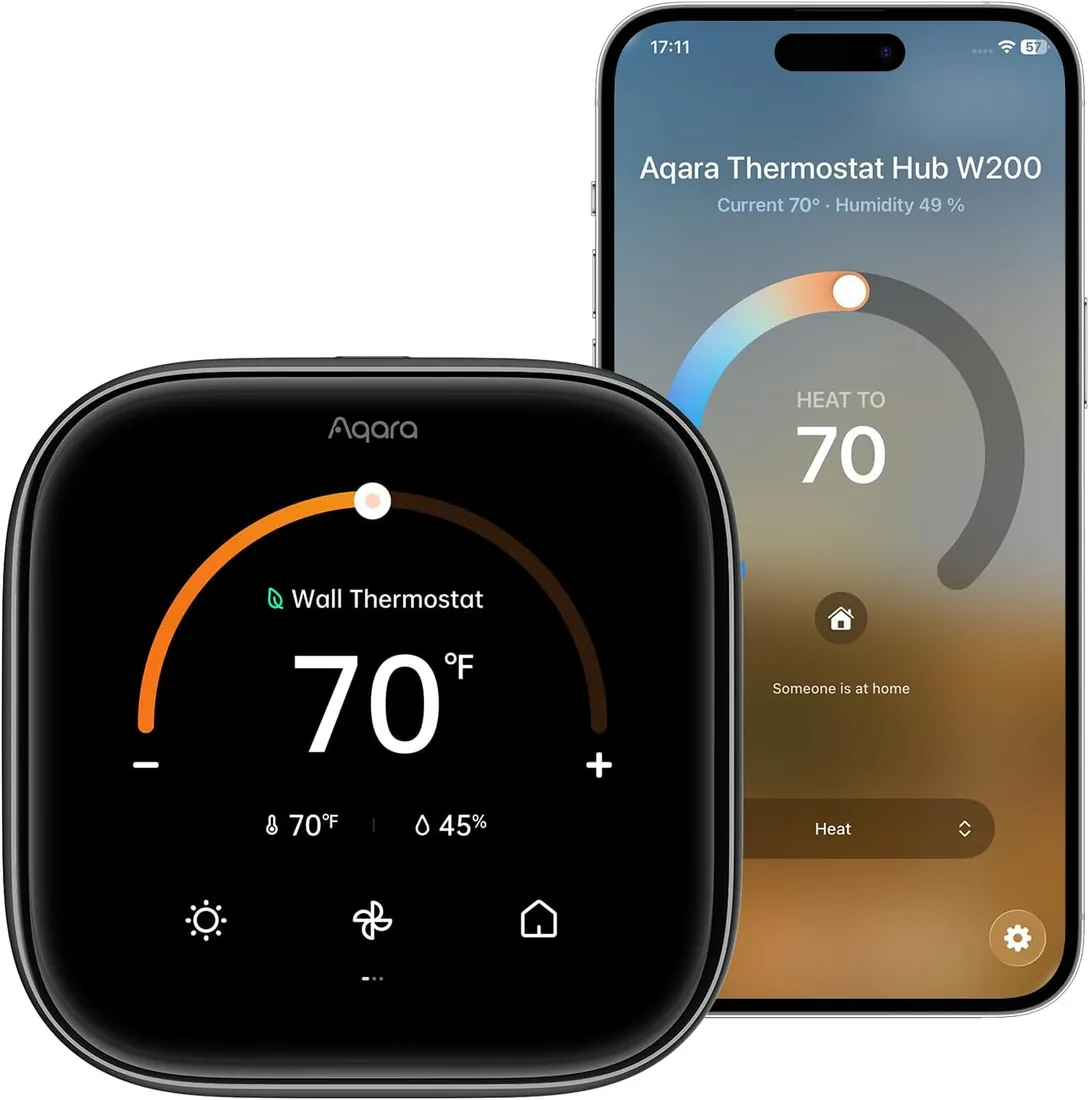
Aqara W200 Smart Thermostat
Heat pump OK
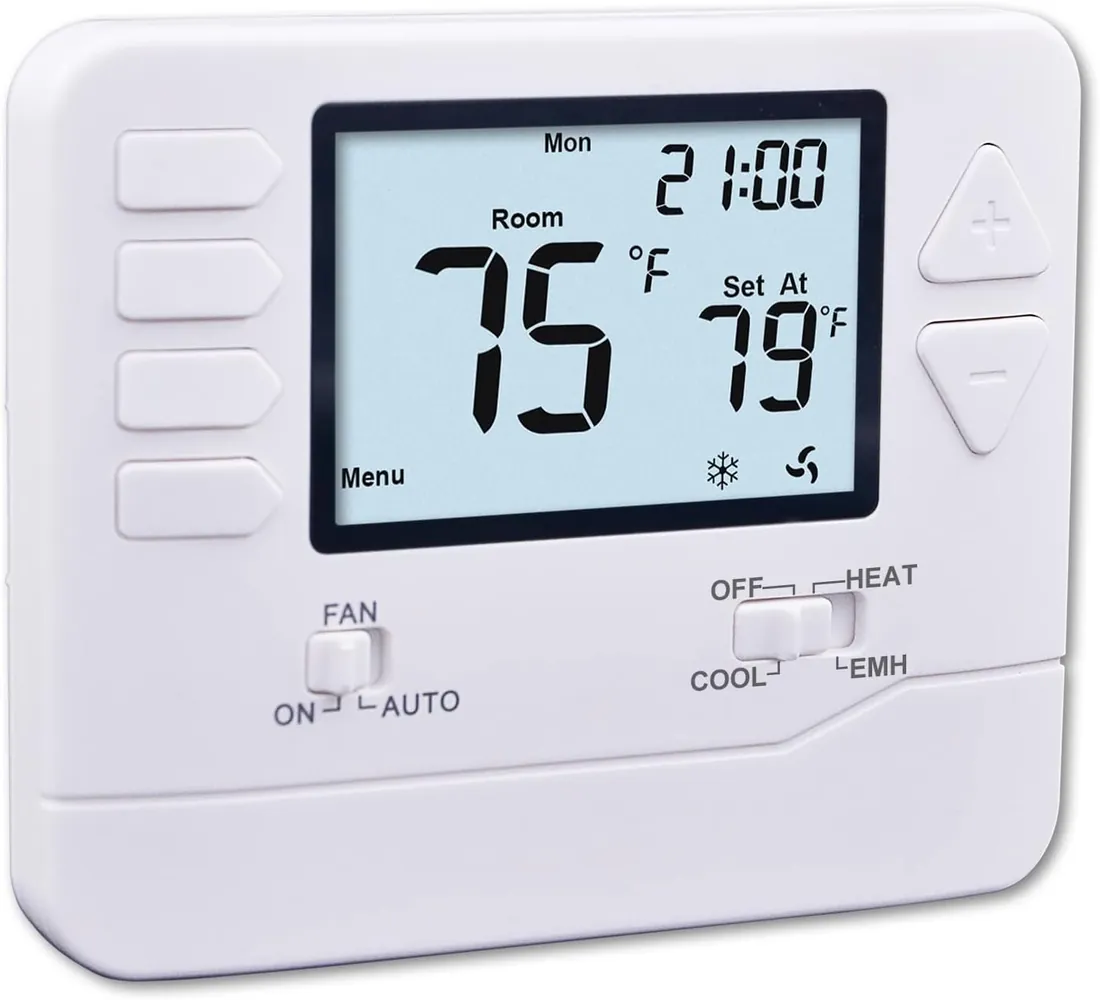
Heagstat H721 Non-Programmable Thermostat
Heat pump OK · 2 Heat/1 Cool
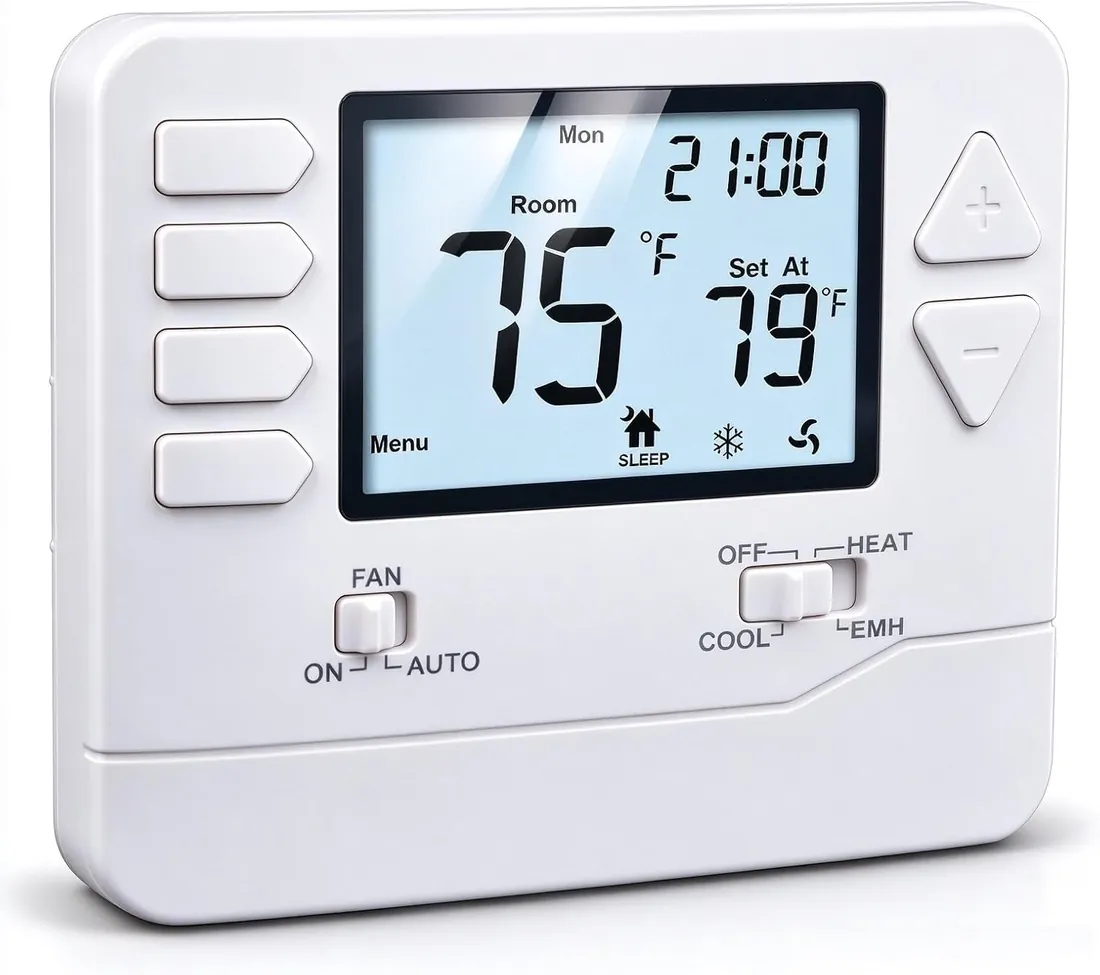
Heagstat H725 Programmable Thermostat
Heat pump OK · 2 Heat/1 Cool
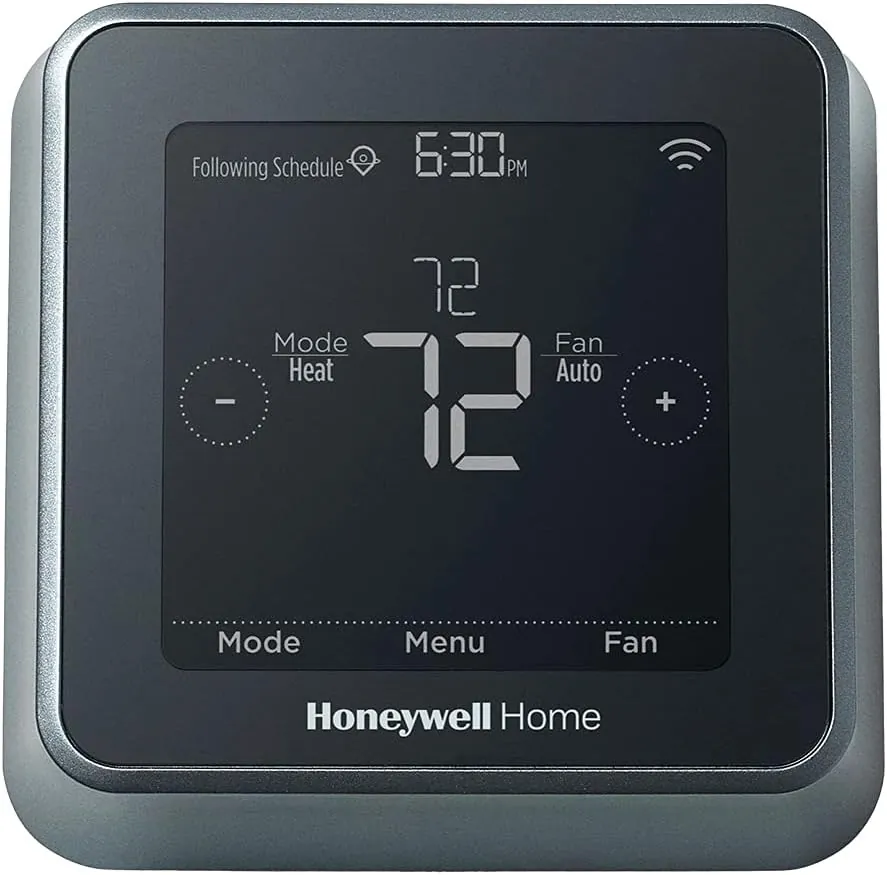
Honeywell Home RCHT8610WF2006/W Smart Thermostat
Needs C wire · Heat pump OK