Every low-voltage thermostat terminal has a job: R (and Rc, Rh) bring 24-volt power, C is the common return, W and W2 call for heat, Y and Y2 call for cooling, G runs the fan, O/B switches a heat pump between heating and cooling, and AUX or E runs backup heat. Honeywell Home's wiring guide is clear that colour doesn't define the job: identify each wire by the terminal it's on.
The terminal letters
| Terminal | What it controls | Typical colour |
|---|---|---|
| R | 24 V AC from the heating transformer | Red |
| Rc | 24 V AC from the cooling transformer | Red |
| C | Common, the transformer's return leg | Blue or black |
| W / W1 | Heat, stage 1 | White |
| W2 / AUX | Heat, stage 2; on heat pumps, auxiliary heat | Varies |
| E | Emergency heat (heat pumps) | Varies |
| Y / Y1 | Compressor, stage 1 (cooling; heating on a heat pump) | Yellow |
| Y2 | Compressor, stage 2 | Varies |
| G | Fan | Green |
| O/B | Heat pump reversing valve | Orange or dark blue |
| S | Wired indoor or outdoor sensors | Varies |
| U | Humidifier, dehumidifier or ventilator | Varies |
| L/A | Heat pump fault input | Varies |
The colour column is convention only. Honeywell's guide says there is no standard for which colour controls each function, so installers sometimes use whatever conductor was free. If the colour and the letter disagree, the letter wins.
R, Rc and Rh
Most homes have one R wire, which powers both heating and cooling from a single transformer. Some have two, Rh for heating and Rc for cooling, because the furnace and the air conditioner each have their own transformer. Honeywell's guide covers both cases: with one R-type wire, even one labelled Rc, it goes into the R terminal and the jumper between R and Rc stays in place; with two wires, R or Rh goes to R and Rc to Rc, and the jumper comes out.
The ecobee3 lite guide gives the same rule from the other side: leave an existing jumper between Rc, Rh or R alone, and label only the wires that run from the wall. If you have a single R, it goes into the Rc terminal on that model. Small differences like this are why the new thermostat's own manual always has the last word.
Heat pump wires: O/B, AUX and E
A heat pump uses its compressor for both heating and cooling, so the Y wire starts the compressor in either season and the O/B wire tells the reversing valve which way to run. Honeywell's guide notes the O/B wire can be labelled W-O/B, O/B, W-O, W-B, or as separate O and B wires; with separate O and B wires, tape off B and connect O. If a shared label like W-O/B leaves you unsure, Honeywell's advice is to work out whether you have a heat pump first: if you do, the wire goes to O/B.
Backup heat for a heat pump, usually electric resistance strips or a furnace, connects to AUX or W2 and sometimes a separate E for emergency heat. Honeywell's guide also flags dual-fuel systems, a heat pump backed by a gas or oil furnace, as a case to pause and call a contractor if you're unsure. Our heat pump thermostat guide covers these in detail.
Terminals that mean a standard thermostat won't fit
- Terminals labelled A, B, C or 1, 2, 3: a communicating system that needs the maker's own communicating thermostat (Honeywell).
- G1, G2, G3: multi-speed fan control, which Honeywell says none of its retail thermostats support. Plain G is fine.
- Thick black or red wires, or a 120 V or 240 V warning label: line voltage, which needs a line-voltage thermostat (Honeywell; the ecobee3 lite guide shows L1/L2 and high-voltage warnings as a stop sign).
- Two wires marked for a millivolt gas valve, often on a wall furnace or gas fireplace: these need a millivolt-rated thermostat; ecobee warns its 24 V model must not be connected to millivolt systems.
How to read yours, step by step
Turn the power off at the breaker or furnace switch. Pull the thermostat face off; Honeywell notes most pull straight off, some lever up from the bottom and some have a locking tab. Photograph the wiring with every terminal letter visible. If you see no letters, look for a mid plate, which Google Nest says can hide the labels; unscrew it to see them.
Write down every terminal that has a wire in it, and note any wire that isn't connected to anything (Honeywell's guide says not to label unconnected wires). Honeywell expects most homes to have five wires, with as few as two and as many as ten. Then take that list to a compatibility check: the maker's own, or our wiring checker, which reads the system from the letters you tick.
A worked example
Five wires on R, C, W, Y and G: conventional single-stage heat and cooling with a fan and a C wire. Almost any 24-volt thermostat fits. Seven wires on R, C, Y, Y2, G, O/B and AUX: a heat pump with a two-stage compressor and backup heat. You need a thermostat whose maker states heat pump support with two compressor stages and auxiliary heat. Two wires on R and W, no C: heat only, often a boiler; look for a model that runs on batteries or includes an adapter.
Tick the same terminals in the wiring checker and it shows the system those wires describe and the thermostats whose makers support it.
Thermostats in this explainer
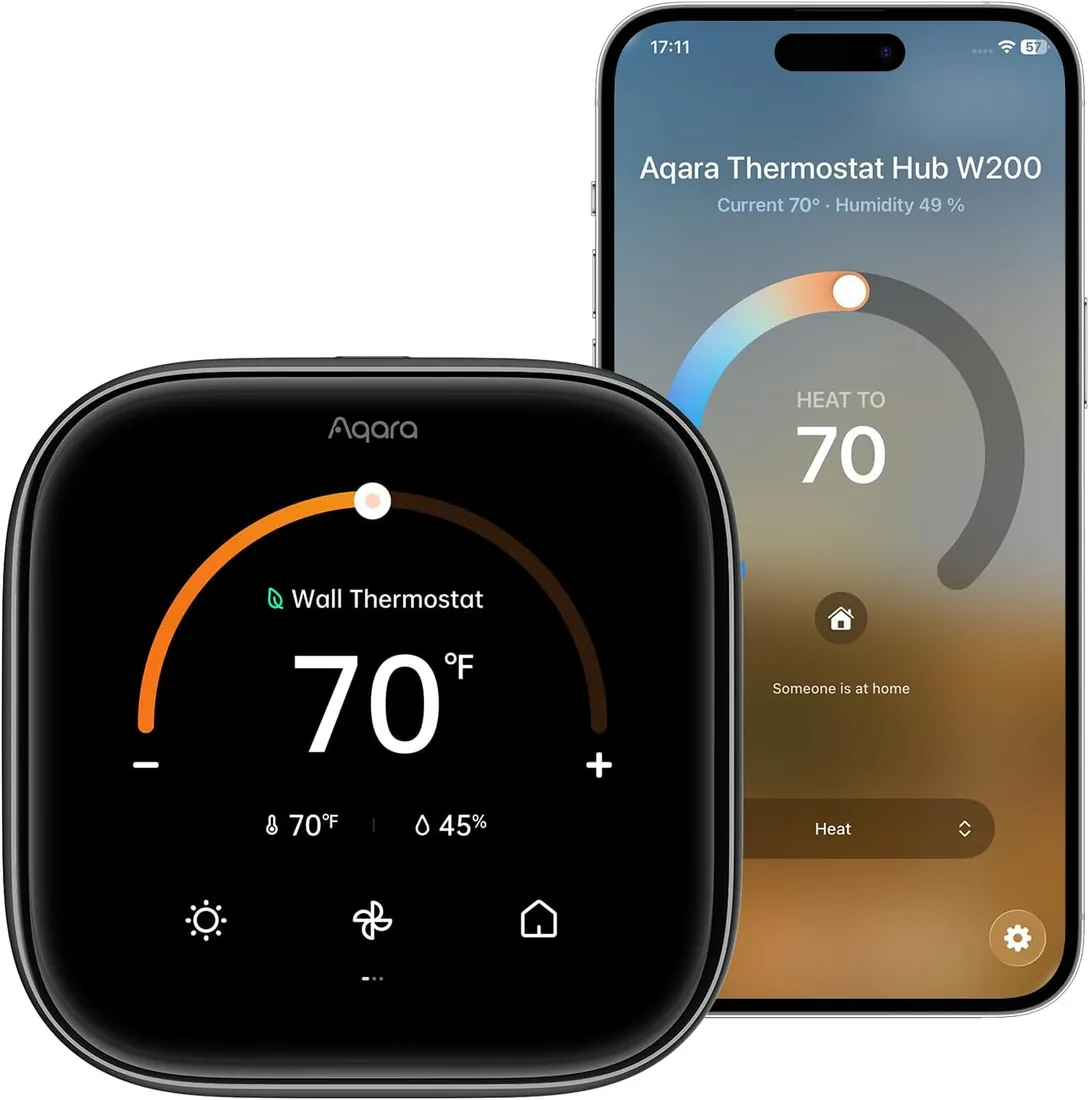
Aqara W200 Smart Thermostat
Heat pump OK
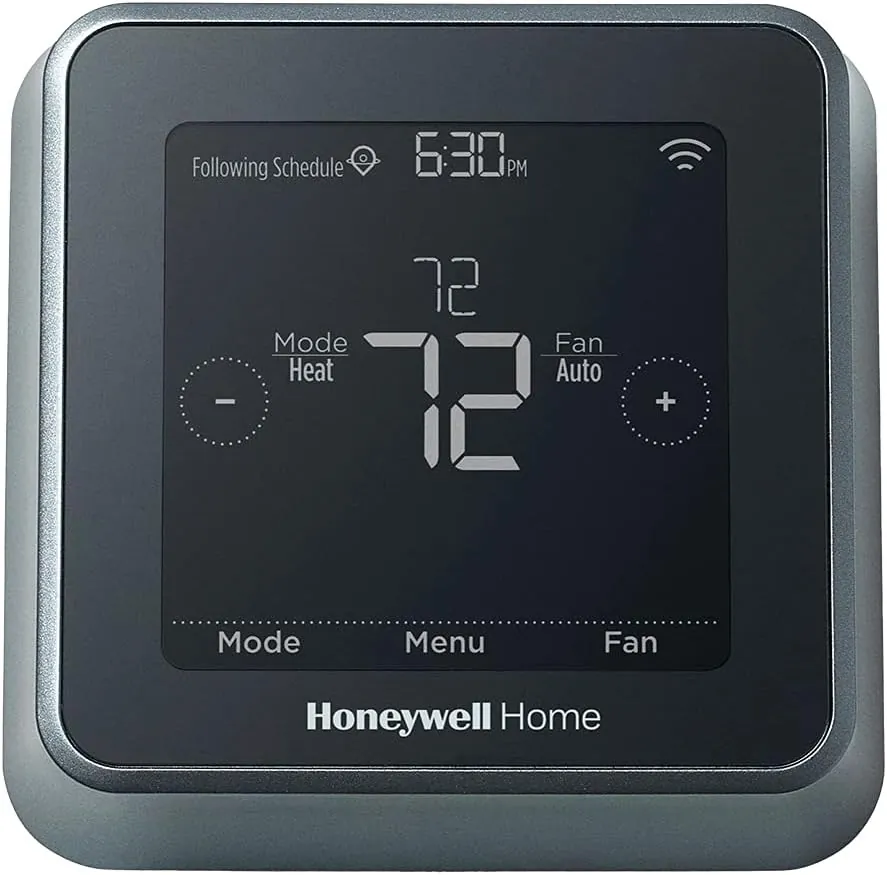
Honeywell Home RCHT8610WF2006/W Smart Thermostat
Needs C wire · Heat pump OK
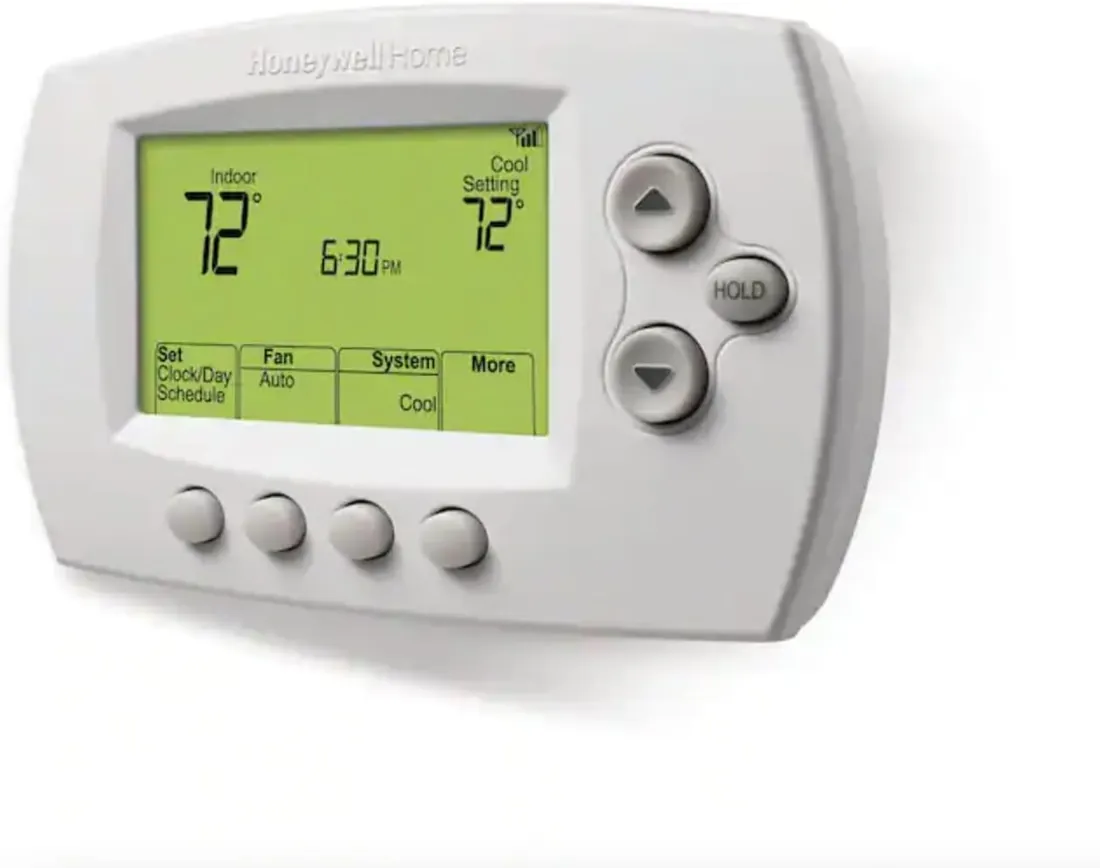
Honeywell Home RTH6580WF Smart Thermostat
Needs C wire · Heat pump OK
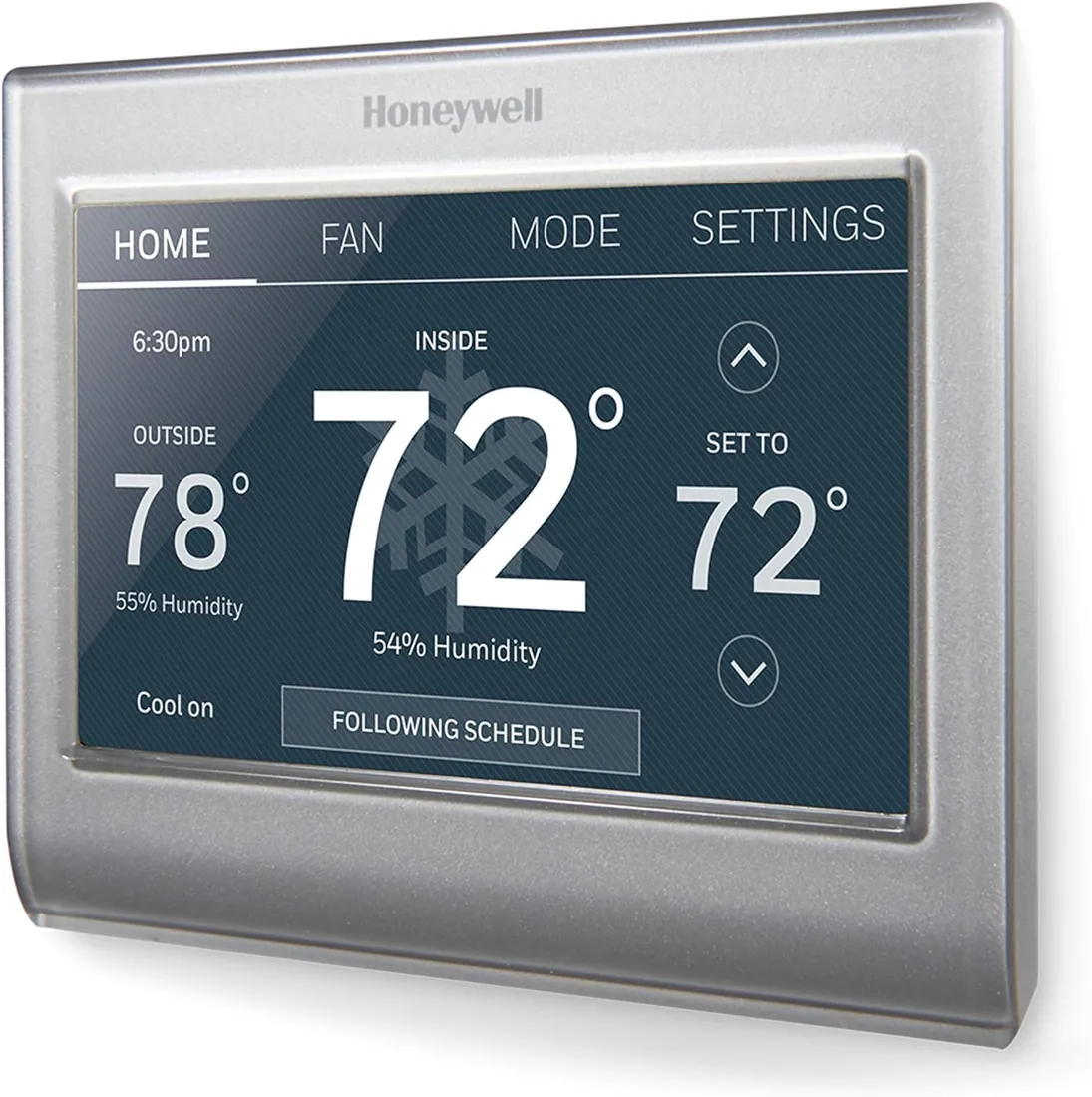
Honeywell Home RTH9585WF1004/W Smart Thermostat
Needs C wire · Heat pump OK