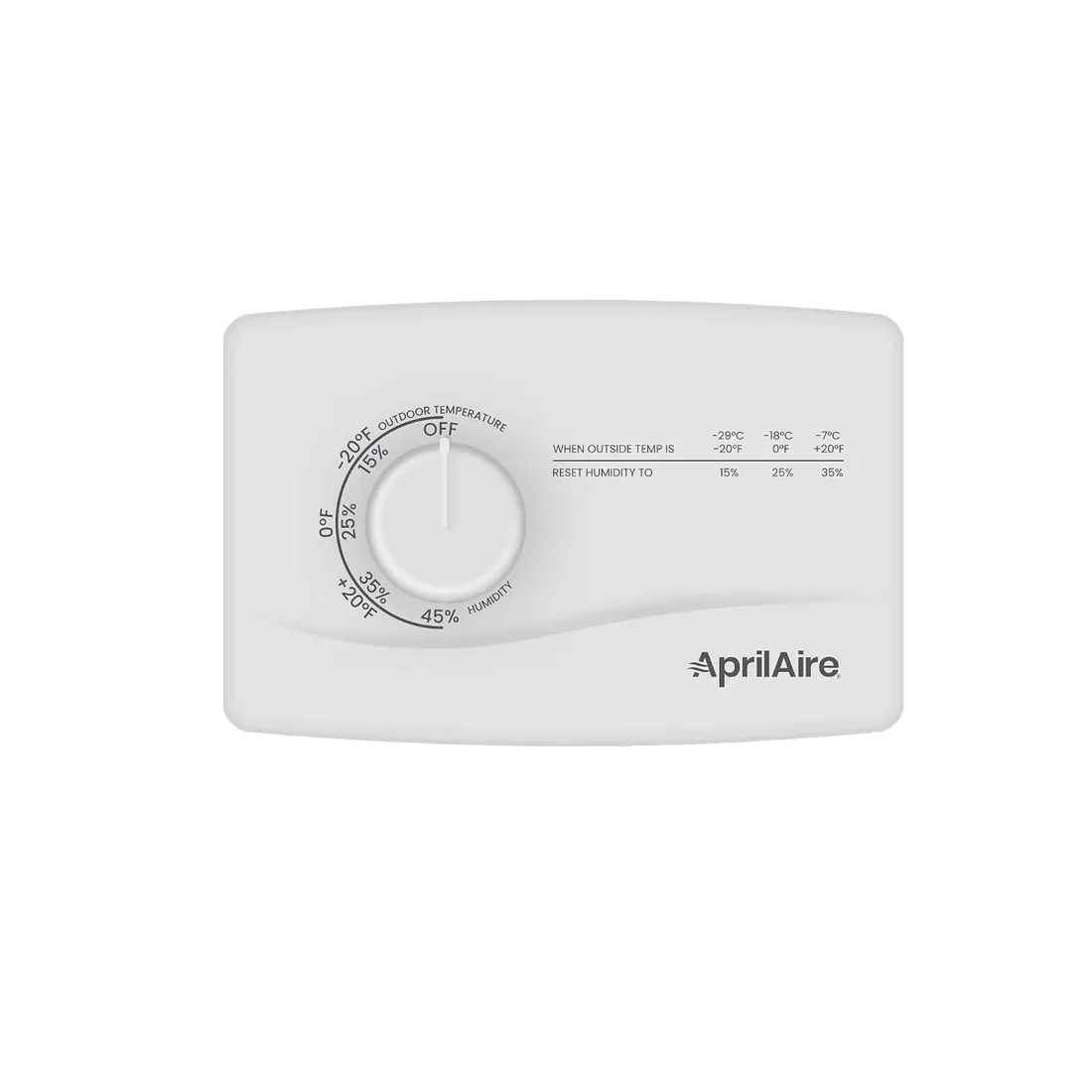
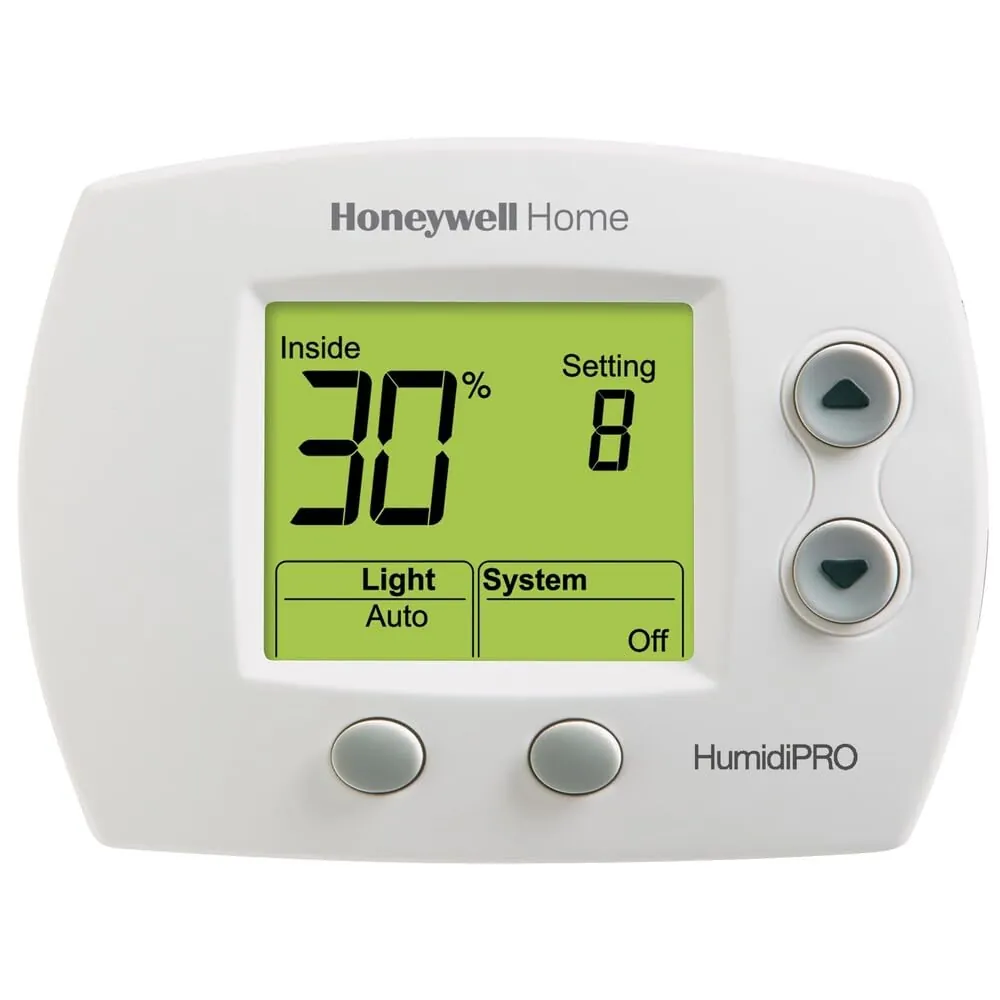
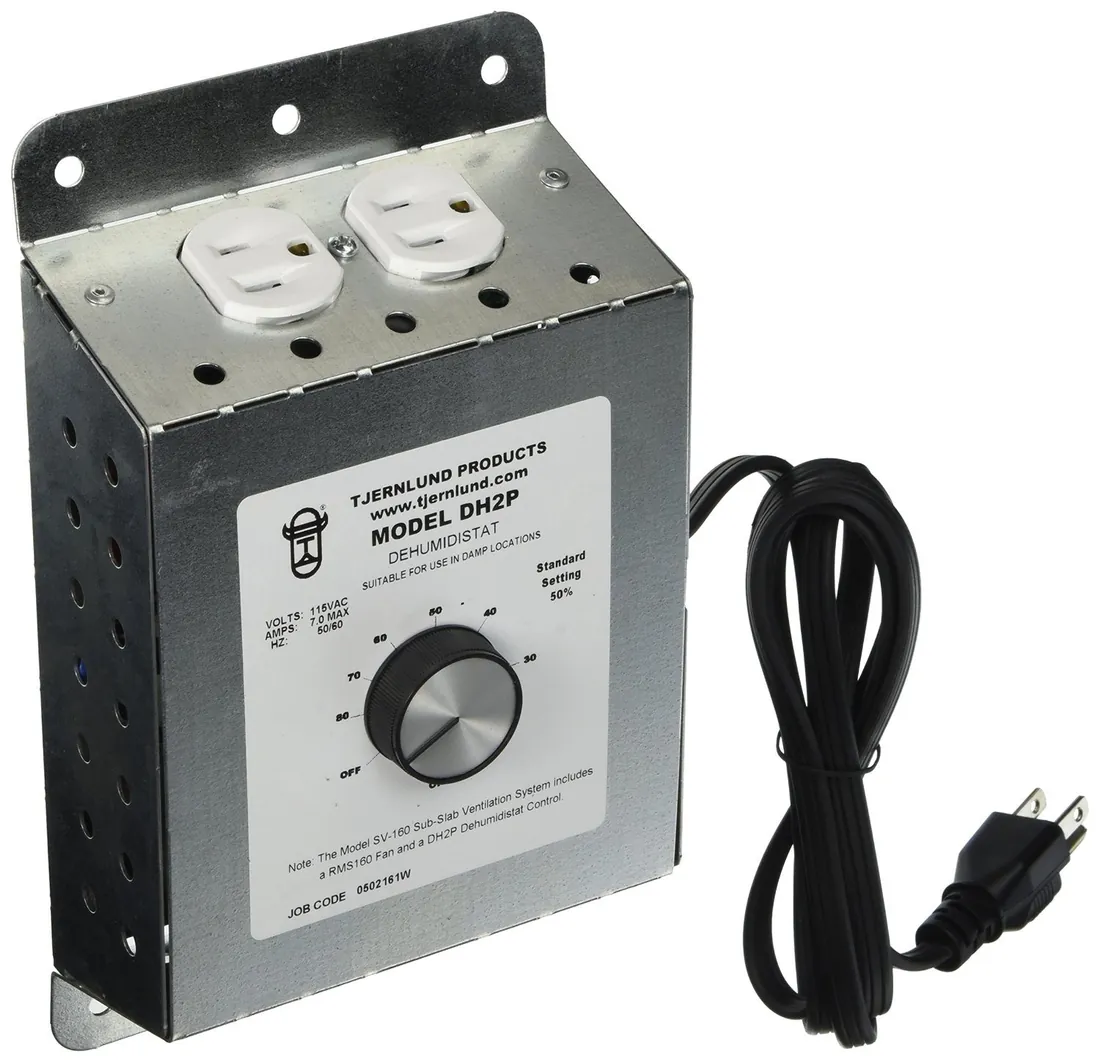
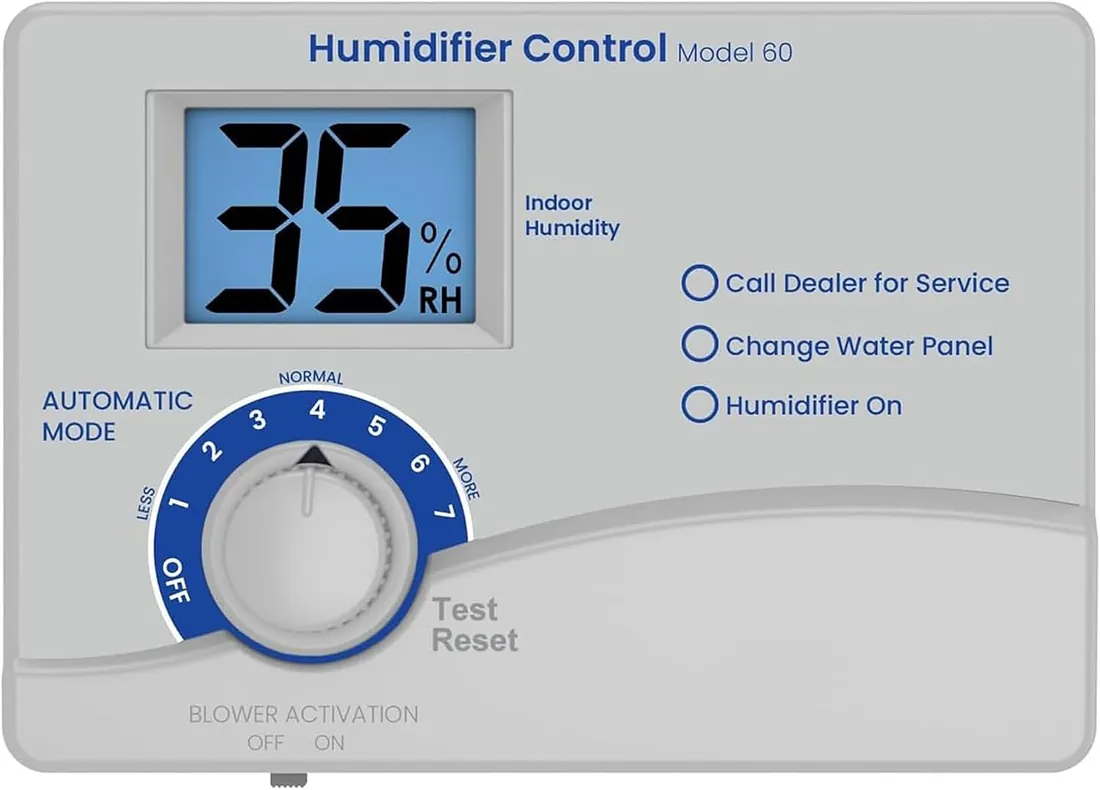
A humidistat is a humidity switch: it turns a whole-house humidifier on when the air is drier than the setting, or a dehumidifier on when it's damper. Many thermostats show humidity, but only those with an accessory terminal can control equipment. Honeywell Home's guide lists a U terminal for humidifier, dehumidifier or ventilator control on models that have one.
What a humidistat does
A whole-house humidifier fitted to a furnace adds moisture to the air as it's heated, which helps in dry winter climates. A whole-house dehumidifier removes moisture in humid summers or damp basements. Both need a control that switches them by humidity rather than temperature: that's the humidistat, wall-mounted or duct-mounted.
A thermostat that simply displays humidity isn't a humidistat. To control equipment, it needs an accessory output. Honeywell Home's wiring guide lists U as humidifier, dehumidifier or ventilator control, alongside the standard heating and cooling terminals.
Standalone humidistat or thermostat control
| Standalone humidistat | Thermostat with accessory terminal | |
|---|---|---|
| Wiring | Its own wires to the humidifier or its control | Extra wire from the thermostat's U or accessory terminal |
| Settings | Dial or simple display | In the thermostat's app or menu |
| Frost control | Manual adjustment, or an outdoor sensor on some models | Often automatic, using outdoor temperature |
| Fits | Any system | Only thermostats whose maker states accessory control |
Our product pages quote each thermostat maker's statement about humidifier or dehumidifier control under 'Features' or 'Works with'. If it isn't stated, assume the thermostat can't do it.
Why winter settings change with the weather
In cold weather, warm humid indoor air condenses on cold windows and inside cold walls. That's why humidistat instructions usually tell you to lower the humidity setting as the outdoor temperature drops, and why some humidistats and thermostats adjust automatically using an outdoor sensor or weather data. Condensation on the inside of windows is the sign the setting is too high for the weather.
Choosing one
- Match the control to the equipment: humidifier, dehumidifier, or both.
- Check the voltage: most whole-house humidifiers use a 24-volt solenoid, but some controls switch line voltage. The listing states it.
- Decide wall or duct mounting; duct-mounted humidistats sit in the return air.
- Consider automatic frost control if you live where winters are cold.
- If you're buying a smart thermostat anyway, check whether its maker states humidifier or dehumidifier control.
| Control | Range (maker) | Voltage (maker) |
|---|---|---|
| Aprilaire 4655 Humidistat | Not stated | 24 V AC |
| Honeywell Home H6062A1000 Dehumidistat | Not stated | 24 |
| Tjernlund DH2P Dehumidistat | Not stated | 120 vac |
| axaiony Model 60 Humidistat | Not stated | 24 V |
A worked example
A home with a bypass humidifier on its gas furnace has an old dial humidistat in the hallway. The owner is installing a smart thermostat whose maker states humidifier control through an accessory terminal. The humidifier's 24-volt solenoid can be wired to the thermostat's accessory terminal, per both manuals, and the old humidistat removed. If the new thermostat doesn't state accessory control, the dial humidistat stays.
Safety and installation
Check your thermostat wiring with the wiring checker; humidity accessories don't change the heating and cooling compatibility it reports.