Pick a programmable thermostat if you'll set a schedule once and leave it, or if your wiring has no C wire and you don't want an adapter. Pick a smart thermostat if your schedule varies, you want phone control or room sensors, or you want an ENERGY STAR model whose savings were measured in real homes. Either beats holding one temperature all day.
The basic difference
A programmable thermostat stores a schedule: one temperature for mornings, another while you're out, another overnight, often with separate weekday and weekend programs. It runs on batteries or the system's 24 volts and does exactly what you set, no more. A smart thermostat, as ENERGY STAR defines it, is a Wi-Fi enabled device that automatically adjusts heating and cooling settings. ENERGY STAR lists common features: learning your preferences to build a schedule, geofencing that knows when you're heading home, remote control from a phone, equipment-use and temperature reports, and software updates.
In 2020, EIA's household survey found 52.59 million U.S. homes with a programmable thermostat and 12.78 million with a smart one, plus 44.08 million with a non-programmable thermostat. It also found 31.04 million households that adjust the temperature by hand. A programmable thermostat only saves energy if it's programmed, and many aren't.
Side by side
| Programmable | Smart | |
|---|---|---|
| Schedule | Set by hand on the thermostat | Set in an app, learned, or adjusted by occupancy |
| Remote control | No | Yes, by phone app and often voice assistants |
| Power | Often batteries; C wire optional | Usually a C wire, or the maker's adapter |
| Energy reports | No | Yes, usage history and run times |
| Room sensors | Rare | Available on many models |
| ENERGY STAR | No category for plain programmables | Field-data label for qualifying models |
| Software updates | No | Yes |
ENERGY STAR's smart thermostat label is based on real-home data showing at least 8% heating and 10% cooling run-time reductions; EPA puts the average saving at about 8% of heating and cooling bills. There's no equivalent label for basic programmable thermostats.
What each needs from your wiring
Both kinds have to match your system type and stages. The bigger difference is power. Many programmable thermostats run on AA batteries and need no C wire. Most smart thermostats need steady power: some require a C wire, some include an adapter, and some say they work without one on most systems. Our product pages quote each maker's statement, and the C wire guide covers the fixes.
Not sure what you have? Tick your terminals in the wiring checker and filter by type.
When programmable is the better buy
- Your routine is regular and you'll program it once.
- You don't want an app, an account or a Wi-Fi device on the wall.
- You have no C wire and don't want to add one.
- It's a rental, a cabin or a room with simple heat-only control.
When smart is worth it
- Your schedule changes week to week, or the house is often empty at unpredictable times.
- You want to adjust from your phone, or to see run times and usage.
- Some rooms run hot or cold and you want room sensors to average or prioritise them.
- You have a heat pump and want the auxiliary heat controls many smart models add.
- Your utility offers a rebate on ENERGY STAR models, which can close much of the price gap.
A worked example
A household spends 1,000 dollars a year on heating and cooling and holds 70°F all day, every day. EPA's average of about 8% would be roughly 80 dollars a year if their result matched the average, which it may not. If the same household already runs a programmable thermostat with a disciplined schedule, a smart model adds convenience but much less saving. The honest comparison isn't smart against nothing; it's smart against the schedule you'd actually keep.
Smart thermostats in our catalog include Aqara W200 Smart Thermostat, Bosch BCC100 Smart Thermostat and Google Nest BH1252 Learning Thermostat; programmable models include Cadet 08121 Programmable Thermostat, Emerson 1F97-1277 Programmable Thermostat and Heagstat H725 Programmable Thermostat.
Thermostats in this explainer
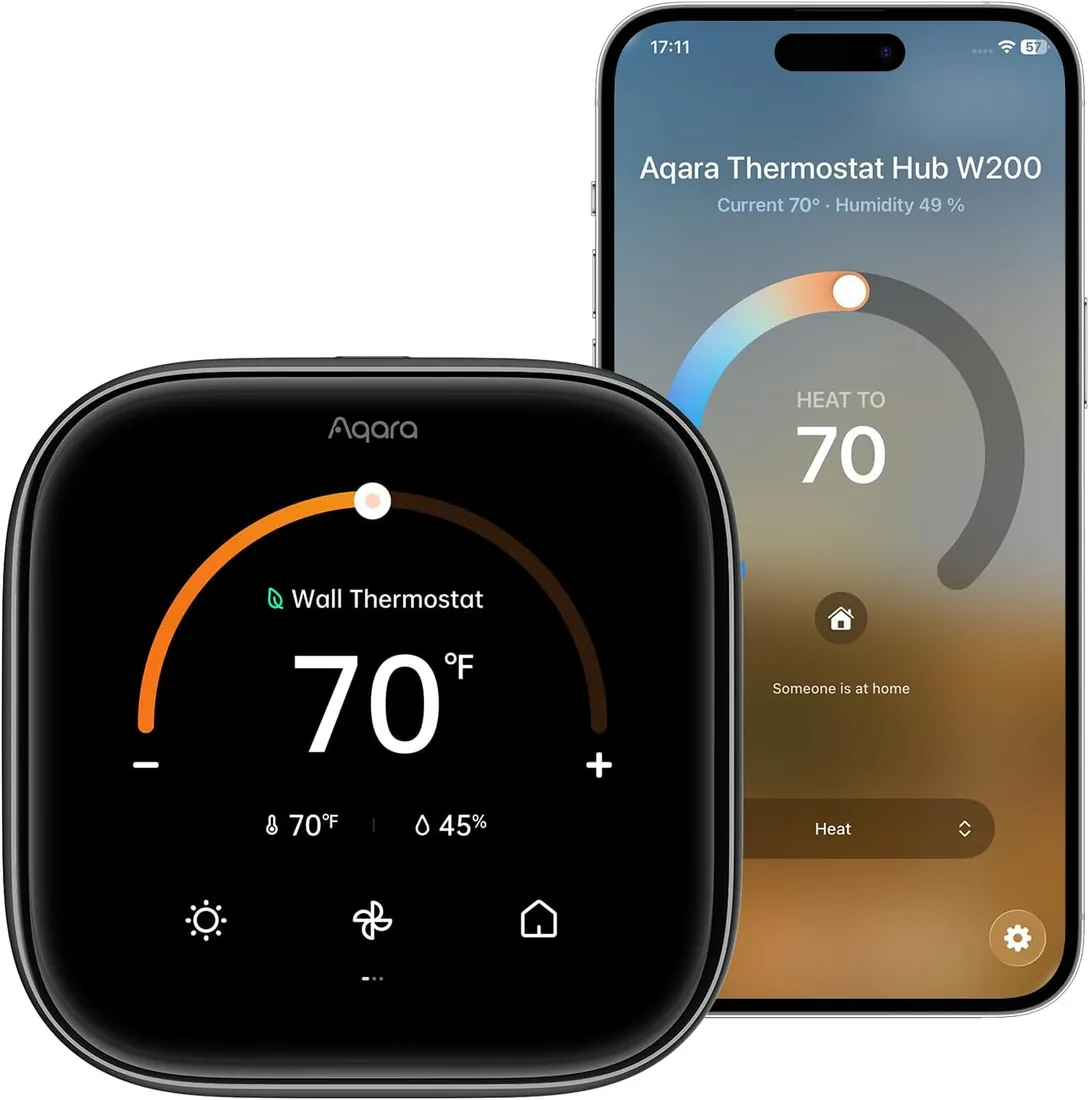
Aqara W200 Smart Thermostat
Heat pump OK
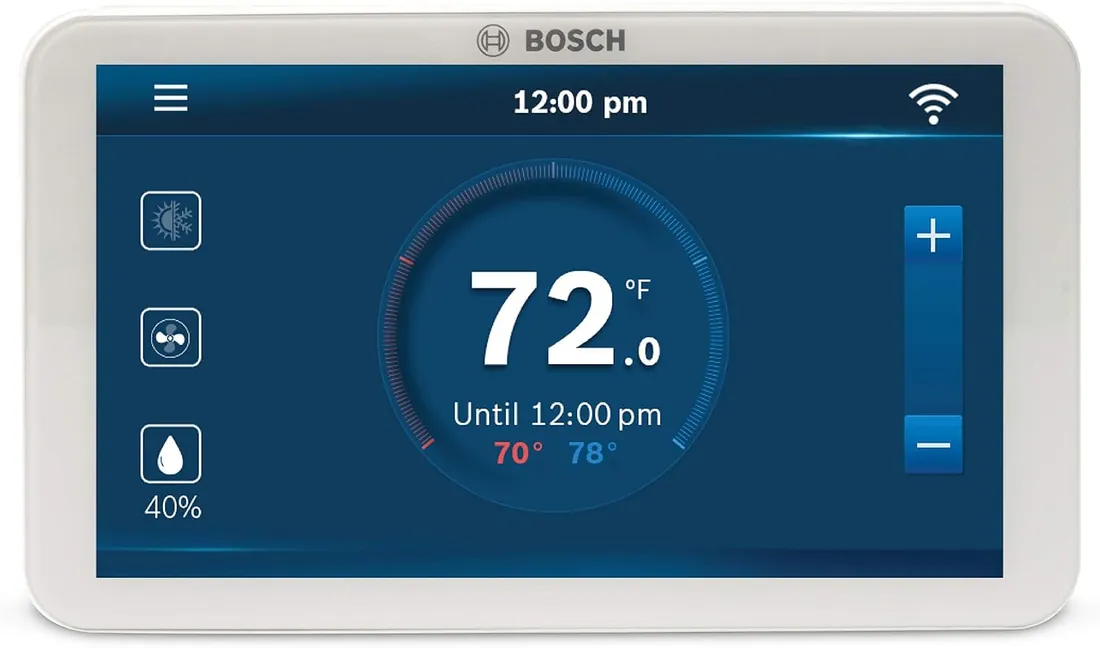
Bosch BCC100 Smart Thermostat
Needs C wire · Heat pump OK
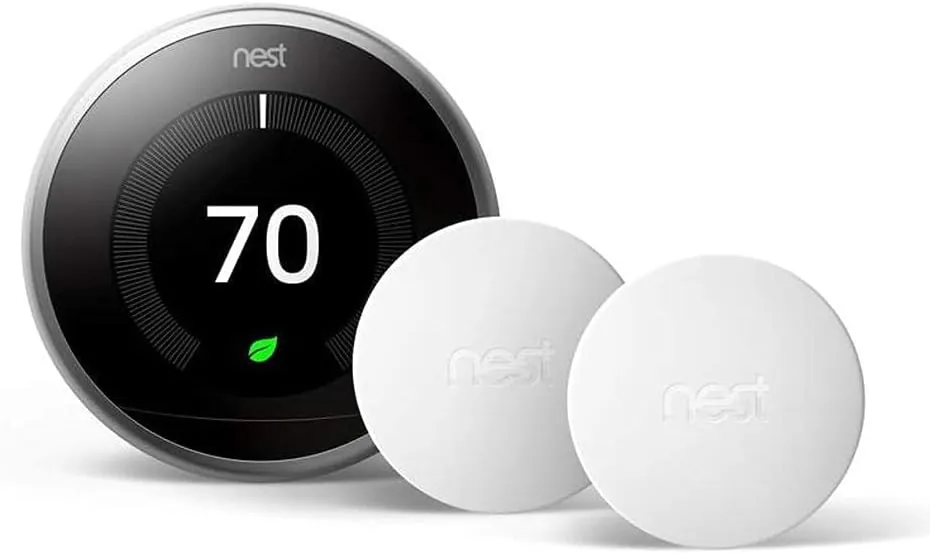
Google Nest BH1252 Learning Thermostat
Learning thermostat
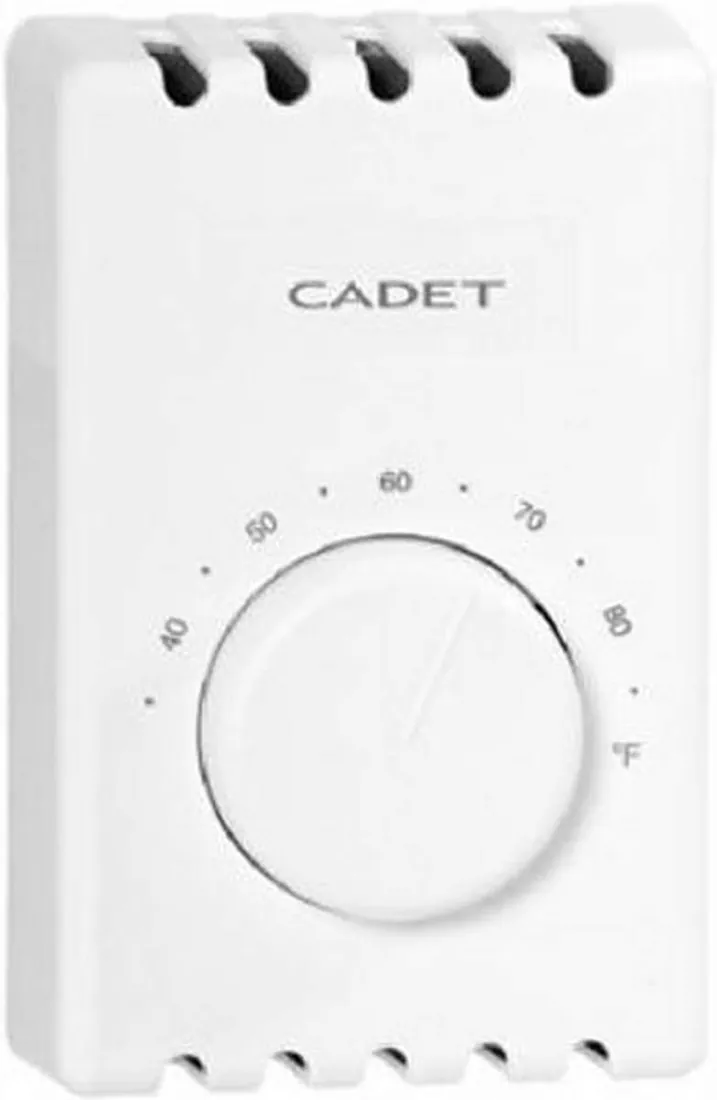
Cadet 08121 Programmable Thermostat
Programmable
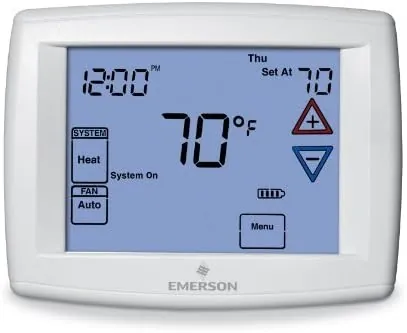
Emerson 1F97-1277 Programmable Thermostat
Heat pump OK · Single-Stage
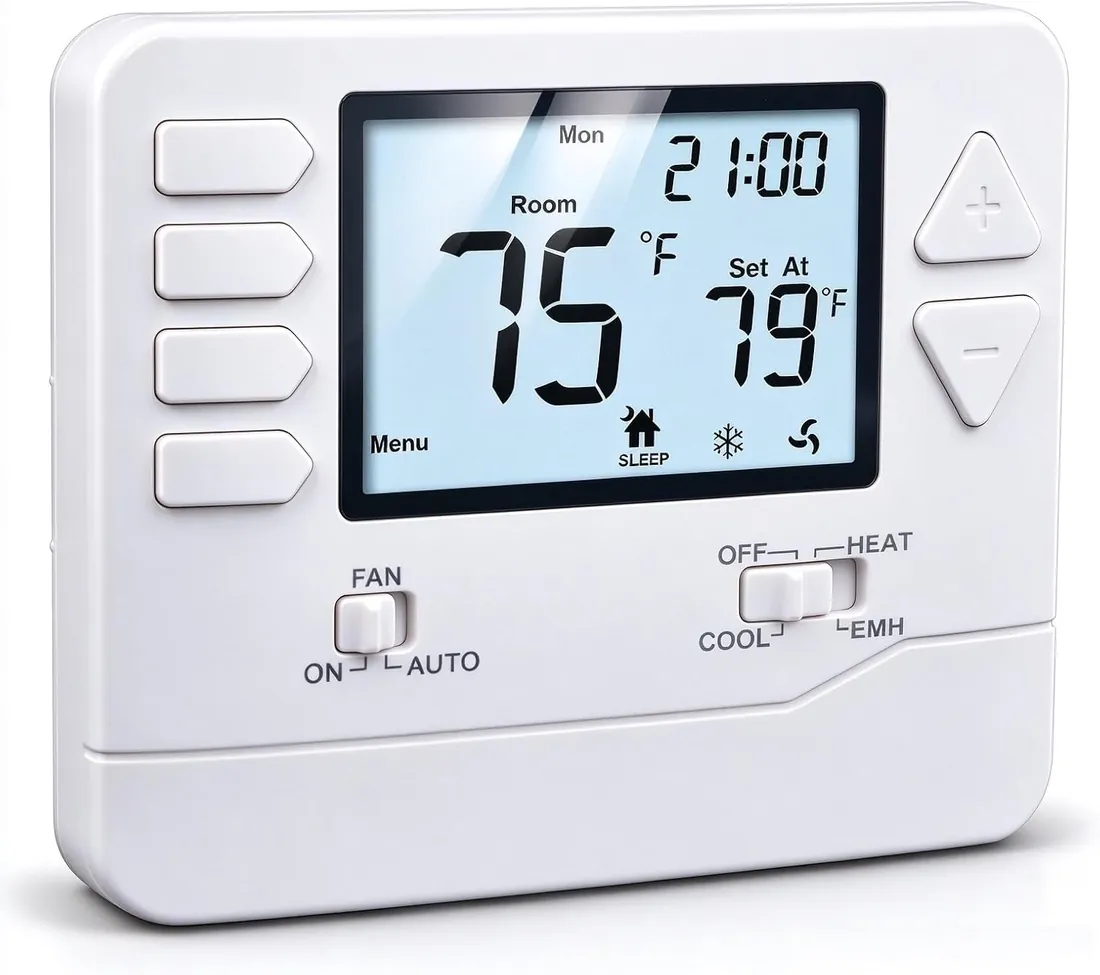
Heagstat H725 Programmable Thermostat
Heat pump OK · 2 Heat/1 Cool